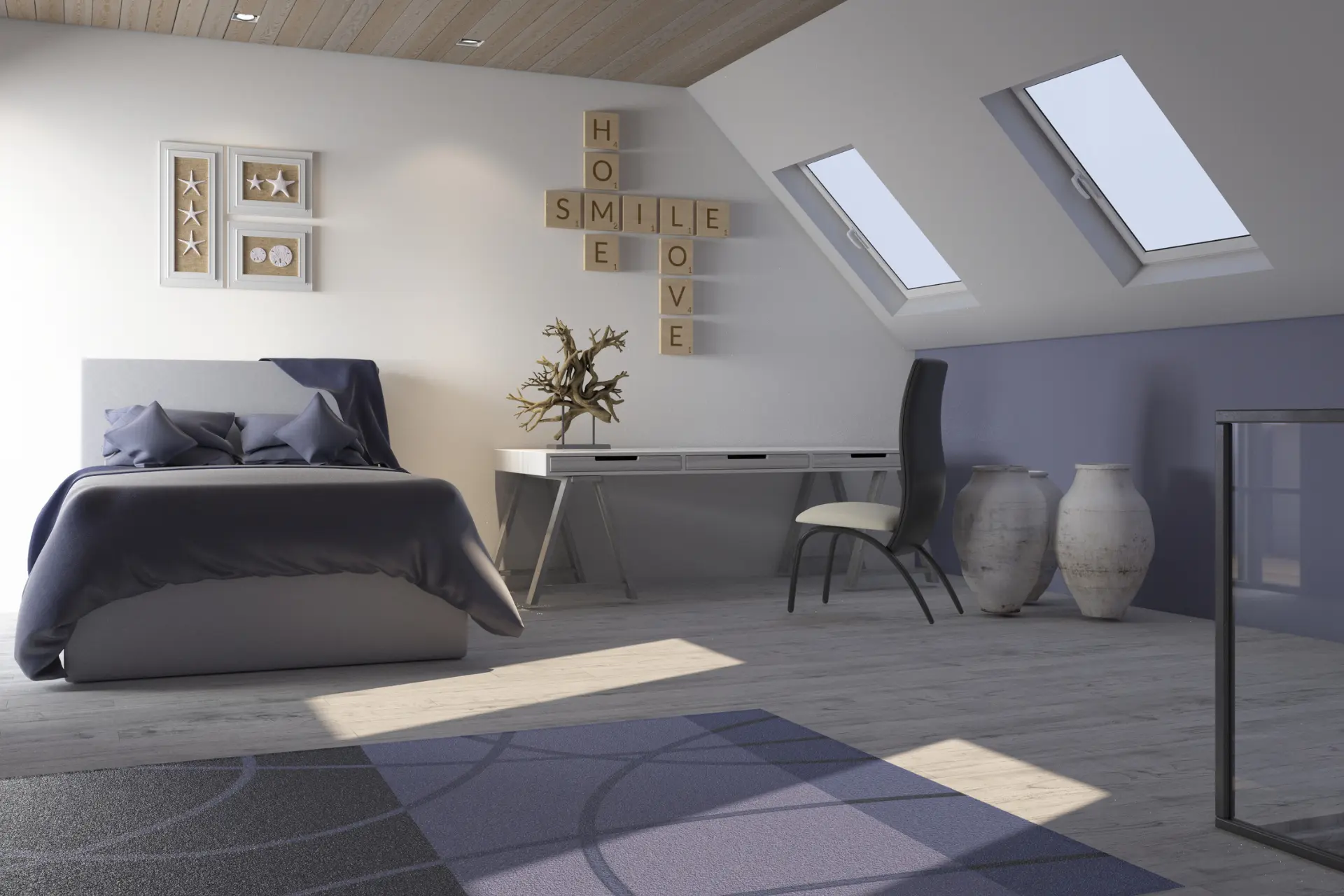
Room-in-roof insulation offers one of the most effective ways to improve the energy performance of your home, particularly if you live in a property with an attic room, converted loft space or a second storey built into the roof. Homes across Pembrokeshire often feature older layouts or traditional builds that were not constructed with modern insulation standards in mind. As a result, these spaces can be extremely costly to heat and uncomfortable to live in.
This article explores everything you need to know about accessing help, funding and advice for room-in-roof insulation in Pembrokeshire. It covers how the insulation works, why it matters, the government-backed schemes that may fund the installation, and how Green Homes Group can support you through the entire process from survey to application.
Pembrokeshire’s housing stock is incredibly diverse. The county includes rural cottages, coastal homes, town terraces, dormer bungalows, older stone buildings and modern family properties. Many were built long before insulation standards were introduced, and loft rooms or attic conversions were often completed without adequate thermal protection.
This means heat escapes easily through the roof. A poorly insulated room-in-roof can lose up to a quarter of your home’s heat, and in some cases even more. With Pembrokeshire’s coastal winds and colder winter temperatures, this heat loss becomes even more noticeable. It leads to higher heating bills, cold bedrooms, and difficulty keeping the home warm.
A well-insulated roof room solves these issues while making the entire home easier and cheaper to heat.
This guide breaks down:
By the end of this article, you will have a clear understanding of your options and a simple route forward.
Room-in-roof insulation involves insulating the uppermost storey of a property where the walls and ceilings form part of the roof slope. This includes traditional attic rooms, loft conversions, dormers or any room built within the roof space.
Unlike standard loft insulation, which is laid on the loft floor, room-in-roof insulation must be fitted within the structure of the room itself. The process ensures warmth stays inside the home, rather than escaping through the sloping ceilings, stud walls or dormer surfaces.
The installer fits insulation boards or mineral wool behind the plasterboard, between rafters, or within stud walls. Every part of the room that touches the roof structure must be insulated to create a sealed thermal barrier. This helps stabilise temperature, reduce draughts and minimise heat loss.
The work may include:
The aim is to create a warm “envelope” that keeps heat inside the room and reduces energy waste.
Uninsulated or poorly insulated rooms in the roof often suffer from several issues:
These issues are especially common in Pembrokeshire’s older coastal homes where wind exposure increases heat loss.
Rigid insulation boards or equivalent materials are installed behind the sloping surfaces of the room. These boards create a strong thermal barrier and can significantly reduce heat loss.
Dormer windows add space and light but often leak heat. Insulating the dormer roof and cheeks ensures the entire room performs consistently.
Gaps around loft hatches are common sources of draughts. Insulating flat ceiling sections and sealing the hatch can improve efficiency further.
Room-in-roof insulation brings multiple long-term benefits that can significantly improve your home’s comfort and running costs.
Insulation keeps temperatures stable regardless of the weather. In winter, it prevents warm air from escaping. In summer, it stops the space from overheating. This makes rooms more pleasant to use as bedrooms, offices, playrooms or guest rooms.
Pembrokeshire homes can lose a large amount of heat through the roof. Insulation helps your heating system work more efficiently, reducing the demand on radiators or boilers. The result is lower gas, oil or electricity bills.
Less energy usage means lower carbon emissions. This contributes to a more sustainable home and supports environmental goals across Wales.
Energy-efficient properties are becoming more desirable. A better EPC rating and improved energy performance can make your home more appealing to buyers or tenants.
Pembrokeshire has many off-gas homes and rural cottages that lose heat quickly. Room-in-roof insulation can dramatically improve comfort in these buildings.
Several government-backed schemes can help pay for the cost of room-in-roof insulation. The type and amount of funding available depends on your household circumstances, your income and your property’s energy rating.
ECO4 is a national scheme designed to help improve the energy performance of low-income or vulnerable households. It focuses on homes with poor EPC ratings and aims to reduce fuel poverty.
You may qualify if:
Pembrokeshire residents often fall into these categories due to older housing stock and higher energy costs.
ECO4 is flexible and may cover:
Your funding depends on how much energy the insulation will save your home. Properties with high heat loss may receive more support, and some households receive full funding.
GBIS aims to help a wider range of households access insulation measures.
You may be eligible if:
GBIS often provides partial funding, but some households may qualify for full subsidies depending on their circumstances.
Pembrokeshire County Council has the ability to widen eligibility for certain residents who do not qualify through benefits alone.
LA Flex allows the Council to approve applications based on local needs such as high energy costs, low income or health conditions.
Eligibility may be granted if:
Off-gas homes using oil, LPG or electricity are typically more expensive to heat. These homes often receive higher levels of funding because insulation can make such a significant difference.
Homeowners can apply directly.
Private tenants must have permission from their landlord, but landlords cannot unreasonably refuse energy-efficiency improvements.
Funding schemes can be confusing. The simplest way is to let Green Homes Group check your eligibility for you during a free home survey.
Receiving benefits such as Universal Credit, Income Support or Housing Benefit can make you automatically eligible.
Even without benefits, you may still qualify if your household earns below a certain annual income. This varies depending on the scheme.
Homes with low EPC ratings stand to gain the most, so they often receive the highest funding levels.
You may need:
Green Homes Group can guide you to gather the right documents.
The first step is to book your free home survey. This assessment is essential for understanding your eligibility and identifying what improvements your home needs.
A trained assessor will:
This information is used to apply for your funding and create a personalised improvement plan.
Green Homes Group is not an installer. Instead, we work with a network of vetted, trusted installers who meet government standards. Once your funding is approved, we recommend the best installer for your property type.
We help with:
This support ensures your application is accurate and avoids delays.
Most room-in-roof insulation jobs take between one and three days. Installers aim to minimise disruption, and work is usually carried out inside the room. Once completed, you will notice improved warmth almost immediately.
Our role is to give you honest, impartial advice. We focus on helping you access funding rather than selling installations.
Government schemes can be complex. We break everything down clearly and check which funding you can access.
We only recommend installers who meet strict quality and compliance standards.
From the survey to your final approval, we guide you through every step to make the process simple.
Disruption is kept to a minimum. Installers usually work inside the roof room and leave the area tidy.
Most jobs take between one and three days depending on the layout of your room.
Yes. Room-in-roof insulation almost always improves your EPC rating by reducing heat loss.
Dormers, angled ceilings and unusual layouts can still be insulated. The survey will determine the right approach.
Absolutely. Many Pembrokeshire households qualify through income, energy costs or LA Flex rules.
Room-in-roof insulation can transform the comfort and energy efficiency of your home, especially in Pembrokeshire’s older or rural properties. With government schemes such as ECO4 and GBIS available, you may be able to access full or partial funding to cover the cost of these improvements.
Green Homes Group can assess your home, explain your options, check your eligibility and support you with the application process. We can also recommend a trusted installer from our network. If you want a warmer, more efficient home, now is the perfect time to take the first step. Book your free home survey today.
Learn more about you can improve your home energy-efficiency with our full range of services.

Interest in ECO5 is growing, even though no scheme with that name currently exists. This may sound confusing, but it follows a familiar pattern. Before...